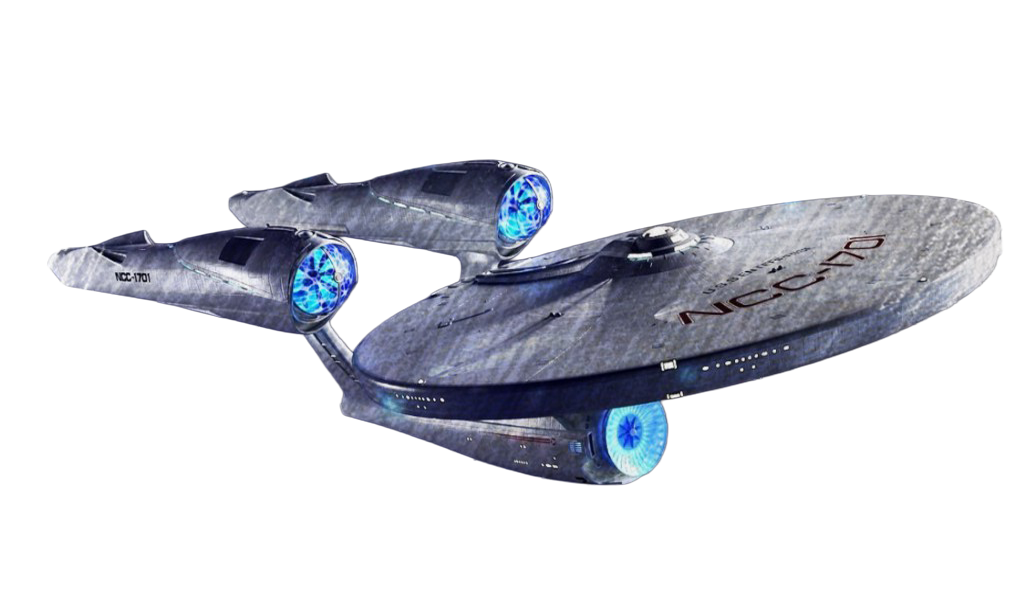
The spaceship "SS Enterprise NCC-170"
But to understand the beginning of this story, my story, I have to travel back in my mind many years, as if I were aboard the spaceship ‘USS Enterprise NCC-170’ and passing through a ‘wormhole’, travelling back in time to the month of September in the interstellar year 13,800,000,1957:
“Commander Chekov, set a course for the interior!” ordered Admiral “Kirk”, even though Mr “Spock” did not entirely agree with this decision:
“ZAAASSSH! ZAAASSSH!” And the ship travelled to the set date in the blink of an eye.
On that very day, and from what I have gradually pieced together through interviews with those involved: the midwife and her makeshift assistant; and the godfather Miguel, amongst others. Not forgetting, of course, my mother, the protagonist... The ‘film’ I have ‘shot in my mind’ begins like this:
...We must picture ourselves on the only flat in a two-storey building, each floor housing a single flat. Built on a quiet street, in the heart of a working-class neighbourhood of, shall we say, honest folk. In one of the rooms, a woman in labour is about to give birth to her fourth child; in those days, mothers used to bring their babies into this troubled world at home; no hospitals, that would come later.
My mother is lying on the double bed, legs spread apart and her nightdress pulled up to her breasts; being naked was frowned upon. She is assisted in the delivery by the midwife and a neighbour.
"If the water’s hot yet, bring it in! And you, push!" It’s Piedad, the expert midwife, giving orders.
“I’m pushing, for God’s sake!” My 'holy mother', who let loose all sorts of swear words; it was her special way of speaking, of expressing herself by externalising her feelings and sharing her moods with those around her.
“Well, it’s not coming out! Push harder! Harder!”
“Yaaah! It’s coming out!”
Said the one who hadn’t heard it yet, Laura, the neighbour acting as an assistant and doing this midwifery work without charging a penny or a peseta, the coins used in those days. She was a good friend of my mother’s and wanted to help her that way. A very common custom among neighbours and ‘friends’ in those days. Nowadays, this sense of familiarity among neighbours has disappeared. We don’t even usually say hello when we bump into each other in the building lifts. What have we come to!
"Keep going! I can see the head! Keep pushing!"
"Ouch! I can’t take any more!" I can only empathise with the suffering my mother went through with this:
«Don’t worry, Mum! It’s...
“To the mother of my soul, I’ve loved her since the cradle.
For God’s sake, don’t overwhelm her, because there’s only one mother.
And I found you on the street.”
(Author: Rafael de León, 1908–1982)»
"It’s out now! Calm down, it’s out now!... It’s a boy!
"Waaah! Waaah! And these were my first words, if you can call them that; they were more like the typical cries of any newborn. I don’t remember what I meant to say, but I’m sure it wasn’t anything good!
The midwife looked at me and noticed one of my distinguishing features:
"Look, he’s got a lovely nose, it’s a bit flat!"
What followed was what was usually done after a birth: they cut the umbilical cord; after the trauma that caused me, nothing less than losing my link to my mother. They gave me my first dip in the zinc basin; luckily, the water was lukewarm. They washed me thoroughly and then dressed me in the clothes prepared for the occasion, and handed me to my mother so she could give me my first round of kisses.
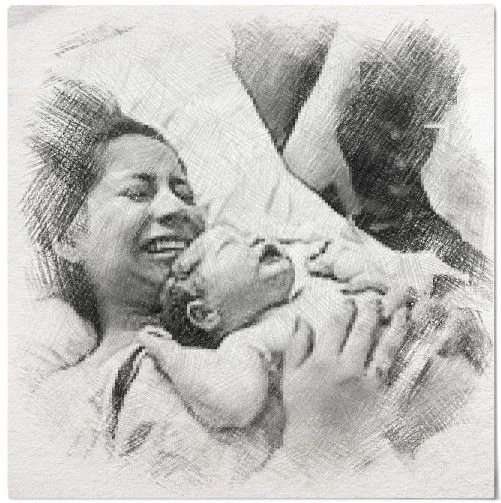
It’s not my Holy Mother, but it’ll do to set the mood for the memory
A short while later, I had my first meal: the delicious milk from my mother’s breast. What I’ve never been able to find out is what happened to the umbilical cord and the placenta, no matter how much I’ve asked:
«But Mum, what did you do with the umbilical cord?»
«What the hell do I know! It’d probably just end up lying around somewhere!» That’s what she replied.
That’s more or less how I came into this world, inhabiting that baby’s body; my spirit left the place where it was and came to fulfil what fate had and still has in store for me.
My father was in Venezuela; he’d left a few months earlier to ‘make his fortune in the Americas’ once again, and try his luck yet again. It was a common occurrence in those days, and more so than it seems; emigrants always trusted that their new journey would be the last one, the one where they’d achieve their goals. Mind you, before that, he’d ‘given his wife another bump’, also known as my mother.
In Spain, the issue of birth control was frowned upon; in fact, it hadn’t been many years since our ‘Civil War’ had ended, not counting the million dead, exiles and victims of reprisals. In addition to those sent to the "Blue Division" in support of Hitler, who perished on Russian soil.
So the directives from the powers that be were to have children, and consequently, offspring that would allow this country to have more hands for its “national resurgence”...
…But, returning to what happened during my labour, three little angels, my eldest sister, aged 7, and my brothers, aged 3 and 2 had listened to everything that was happening from the living room. They were waiting to be ‘allowed’ into the room so they could welcome their new little brother. This happened a few hours after I came into this world; when they saw me, they looked at me as if I were some sort of ‘oddity’. They’d have plenty of time to find out who I was! Now they knew there was a new member of the family and I’d come to stay.
“Can I hold him?” asked my sister Isa (Isabel), who must have thought I was one of her dolls.
“Of course you can, darling!” She stretched out her arms and handed me to her daughter. “Here, hold him carefully!”
With a sudden maternal instinct, my sister took me in her arms and I don’t know what she said to me; I didn’t understand a word, I just felt her mouth come close to my cheeks and give me kisses.
A little while later, once the ordeal was over, I returned to my mother’s protective embrace.
"Has the stork that brought him gone now?" was the innocent question asked by my brother Leo (Leonardo).
"What the hell do you mean, the stork! Your brother came out of your ? 'mother’s pussy!’
“Bloody hell, Antoñita, don’t spoil his belief in the stork!”
“Stop being so childish, Laura! You shouldn’t create a false world for children; the sooner they find out what life is really like, the better!”
It was clear from that that babies don’t come from Paris. I don’t think my brothers suffered any kind of trauma from this categorical explanation; rather, it became clear to them that when a woman had a bump, it was because she was expecting, that is, pregnant. Barring any possible exceptions, such as a woman whose weight gain comes from having eaten more than necessary, in other words, if she’s just fat! When my mother had finished explaining her aforementioned ‘pussy’, the midwife spoke:
"I’m done here! Antoñita, make sure you look after yourself, especially these days. I’ve arranged for Laura to come over and help you with whatever you need. If you need me, just send word and I’ll come,” here she tried to lighten the mood; “and I hope to do so soon in my own car! I’ve ‘taken the plunge’ and we’ve already paid the ‘deposit’, no less than 20,000 pesetas. And don’t ask me where I got it from!"
‘Well, that’s not expensive!" exclaimed Laura.
“Bloody hell! That damn ‘600’ costs over 65,000 pesetas. We’ll have to pay that when they hand it over, and then they’ll refund the deposit.”
“And will they hand it over soon?” she asked again; she seemed interested in the car.
"It’ll be a long wait! It could take anywhere from one to three years for them to give it to us."
"What do you think of the million? You make more money with this birthing business than I do sticking needles into a bunch of backsides. By the way, please open the drawer in the side table and take the envelope inside; your money’s in there," my mother told her.
‘Well, I’m doing very well, Antoñita! I’ve taken out two loans and I’ll still be paying them off when I’m dead. But it’s worth it; with my 'Six Hundred' I’ll be able to go anywhere, come rain or shine. I’ll finally be independent!" As the midwife went on about her finances, she took the envelope out of the drawer my mum had pointed to.
“Do you think they’ll sell many of these ‘Seat 600s’?” asked Laura.
“Goodness, they’re not exactly giving them away! They cost what a person earns in years, but I think so. And I’ll tell you one thing! They’re very well made; they’re built in Barcelona.”
“Well, I’ll have to have a word with my husband; the whole family doesn’t fit on the motorbike anymore, we’re just about to have to tie my two children to the back with a rope and drag them along.”
“It’s the same for us! And now with this one, there are six of us in the family, we’ll see…!” The phrase “we’ll see!”, which my mother said, was like a secret prayer to the Almighty, asking him to come to our aid and provide a solution to the problem at hand.
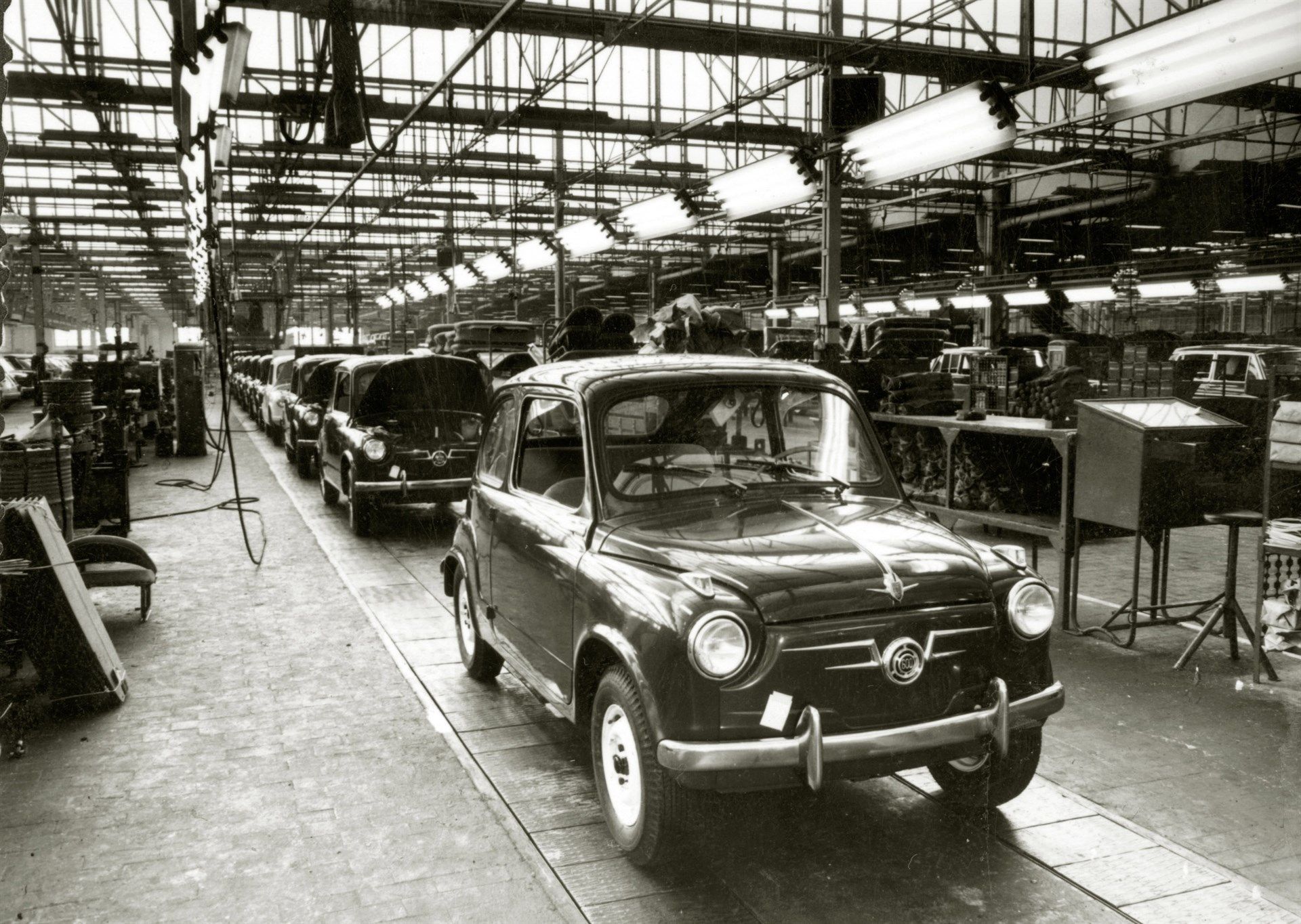
The first “Seat 600” to roll off the assembly line at the “Zona Franca” in Barcelona did so on 27 June 1957.
And when production ceased on 3 August 1973, after 16 years, a total of 799,419 units had rolled off the production line; it had become the most popular utility vehicle ever built in Spain.
The “600” was the Spanish version of the original “Fiat 600” model and was the result of an agreement between “SEAT” and the Italian car manufacturer “FIAT”.
It weighed 600 kilos and was built from sturdy materials. Despite its compact size, it had four seats so that the whole family could travel in it.
…The next day, neighbours and other loved ones were expected to visit; they would all come to congratulate the mother on the birth of her son – that was the custom. These days, people usually go to the clinic, and only the closest family and friends attend.
The first things to appear through the door, which was left open to avoid having to get up, were three jugs or metal containers, and no, they didn’t have a mind of their own! They were being held by a man and a young woman, and although they were sealed, an unmistakable smell of chocolate wafted from them. Although I think it’s impossible for me to remember it, as I was just a baby, I still believe I do, that I remember it…!
«Don’t be silly, Little Red Riding Hood! (said the subconscious)».
"Well, ‘mate’! Well, that’s probably how it was; I’m just imagining it. Let’s carry on!... These certainly weren’t your average neighbours. He was Mr Rosselló, owner of the chocolate factory of the same name, which stood at the start of our street, facing the main road:"
"Ah, the house!" cried the chocolatier, who was a joker.
"Come in, come in, Mr Rosselló! What brings you round here?"
My mother recognised the visitor at once; he was a much-loved man in the neighbourhood, with the lovely habit of giving his chocolate to new mothers. Something today’s local business owners could take note of, if there are any left! For the vast majority are multinationals, without a heart or any dedication to their customers or consumers. «Oh, Mr Rosselló, how we miss you!»
"What are you bringing me! I’ve been told we’ve got a new customer in the neighbourhood. And so he can start getting used to my chocolates, here are three cups of hot chocolate for you..."
"But that’s too much! One will be enough."
"Don’t talk nonsense; with this cold weather we’re having, the neighbours who visit you will appreciate a nice cup of… Rosselló Chocolate, the best chocolate in the world!" the man made a sort of radio advert. "Come on, Pepita! I see the kitchen is over there; follow me with your jug and we’ll put them all in."
"Don’t bother, I’ll get them!"
"You go and rest; you’ve got a long day ahead of you!" said the chocolatier sternly.
"Don’t you fancy a little drink?"
"No! They’re waiting for us at the factory; we’re already preparing the nougat for this Christmas. But before we go, let me ‘eat’ this little one’s feet, they look just the ticket… Mmm!" And he came over to me; for a moment I thought that cannibal was actually going to eat them, but he just let out a growl: "Ahagrrr! Mmmm, yum, yum, how lovely! I’m going to gobble these little feet up in one bite!" He was lucky; my feet didn’t smell of ‘cabrales’ yet!
After that, the ‘chocolatiers’ left through the same door they’d come in.
But we already had “provisions” to satisfy the hunger and thirst of the next visitors; what’s more, we’d got them for free.
The first to “dip their hands” into the milk jug when they returned were my siblings; all three filled their cups with the tasty “Rosselló” chocolate, though in truth, it was my eldest sister who filled them all.
A few hours later, the next “admirer” of the newborn arrived, and this time it was a man on his own; specifically, it was someone who, from my birth right through to my teenage years, had always been like a second father to me, I’m referring to my “godfather”. And that was Miguel, a man of my parents’ age, who was eager to hold me in his arms:
"Let me hold this little ‘rascal’!"
And the way he grabbed me was just like a ‘bear hug’. As if that weren’t enough, he also gave me the customary jiggles on such occasions. Having had his fill of ‘shaking’ me:
‘Well, it’s true he’s got a flat nose! I know what I’m going to call him… “Flat-nose”!
“I don’t think they’ll let us christen him with that name,” remarked my mother.
“Well, call him Miguel!”
“That’s a possibility, though to avoid arguing with my husband’s family, I’ll call him Antonio, just like me.”
“I like that too! Little Antonio ‘the Flat-Nose’,” he said, finally placing me in my cot.
“Have a cup of hot chocolate!”
“I don’t like it, it upsets my stomach!” replied the godfather; there were, and still are, many people who have this reaction.
“Then I’ll make a pot of coffee and we’ll both have a nice cup.”
An hour later, with Miguel already on his way back to his grocery shop, our neighbour from the house on the right, Margarita, came in. She was two years older than my mother; she had just turned 34. She wasn’t very tall, but she was ‘all heart’.
She had a son who was already grown up in my eyes, aged 14, whom she’d had with ‘Tomeu’ (Bartolomé), whom we all thought was her husband and who was many years older than her. Years later, I learnt from my mother that they weren’t married, but ‘living together’; divorce wasn’t permitted by law in those days. This prevented him from divorcing his first wife and marrying our neighbour.
As a true 'payesa' (country woman), Margarita was all kindness in her dealings with her close friends. For this occasion, as a gift, she brought with her a basket full of fruit. It all came from the trees in her orchard.
There were the ones that would go on to become my favourite fruit: mandarins. But I still had to wait a few years before I could sink my teeth into one.
Once again, I was in for another ‘cuddling’ session, although Margarita was very careful not to hurt me with her arms.
"By the way, were you able to add the father’s name?" my mother asked her, taking advantage of her presence to raise a matter the visitor had left unresolved.
“In the end, with a letter of recommendation from the parish priest, they didn’t give me any trouble and my son ‘Rafael’ now has an official father. I was a bit of a mess with it all! But when the time comes for him to inherit, this way he won’t have any problems, ‘betualmón’! (snub).”
“And didn’t his wife object?” my mother continued to ask.
“Well, no! We were taken by surprise, I’ll tell you…”
“As this is going to take a while, why don’t you fetch us two cups of hot chocolate first! It’s on the house, it was a gift from Mr Rosselló. I’d go myself, but I’m tired!”
With the cups now in her hands, Margarita recounted her legal adventure and, of course, my mother caught up on the matter, whilst I took the opportunity to have another ‘dose’ of delicious milk...
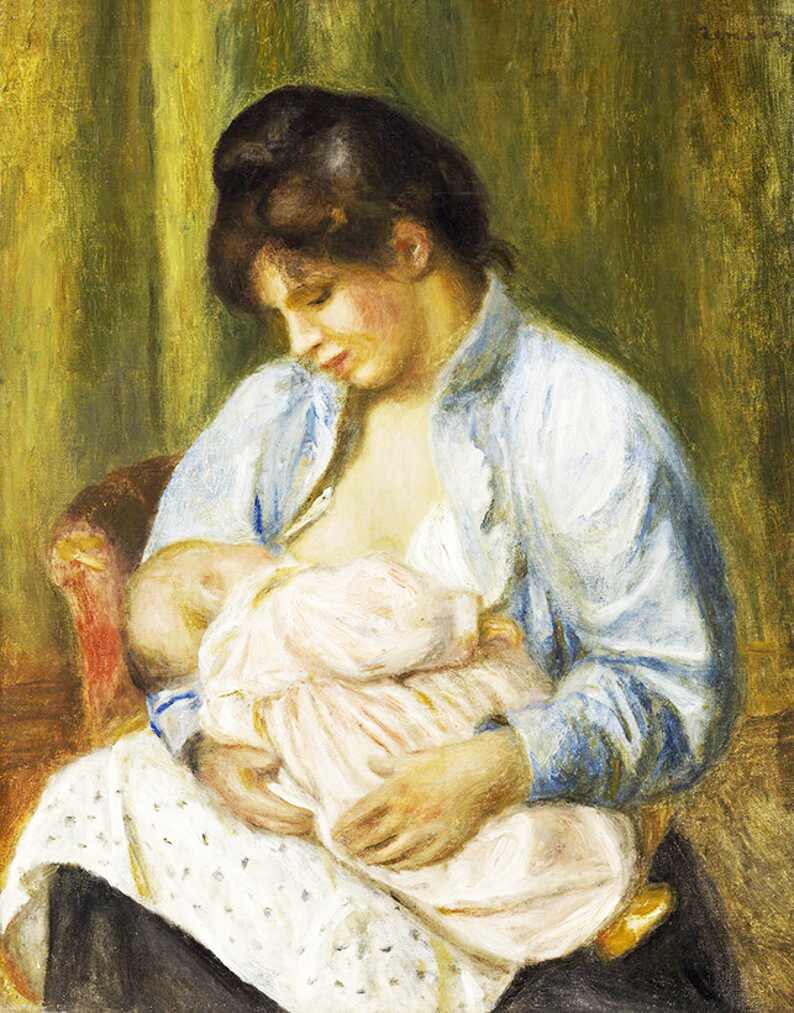
This painting by Pierre-Auguste Renoir, produced between 1893 and 1894 and entitled ‘A Woman Breastfeeding Her Baby’, helps to set the scene.
"…And since his ex-wife had no objections to ‘Tomeu’ acknowledging our son, the priest had no qualms about writing the letter." That’s how Margarita wrapped up the news on the matter; my mother was already up to speed:
"Well, as I said, congratulations! And since you’ve become an expert at registering children, will you take care of registering Antoñito’s birth?"
"Of course, count on it!" Margarita accepted the task.
“You’ll have to sort it out with Laura so she can give you the Birth Certificate. We agreed that the midwife who attended the birth would sign it. I suppose she’ll have it in a few days.”
“Don’t worry about it. I’ll speak to her and take care of submitting it to the Registry. I’ll make a note of some details for the form now, and when I’ve got everything, I’ll submit it.”
“Won’t you need me to sign the application?”
“I’ll just scribble something down myself!”
And she was the one to blame, yes, the one to blame!, for not knowing the exact date of my birth. It seems not everything went to plan, and in the end, when Margarita submitted the application for registration at the Registry Office, the clerk at the relevant counter pointed out that the application had been submitted after the deadline for registration.
This consequently led to a fine; I don’t know how much the penalty was, but it was enough for Margarita to shrewdly improvise the following:
"And what date have I put for the birth?"
"It says the 18th here. What’s the matter? Don’t you remember when he was born?"
"Of course I do! It’s just that there’s so much to fill in, I got confused!" Her mental calculator quickly did the maths and she worked out which date to put so as not to pay any fine. "It was the 21st!"
"If you put the 20th, that’s still within the deadline," too, said the official, who had realised the deception; she wasn’t the first person to resort to a ruse to avoid paying the fine, and Margarita went along with the lie.
"Oh, how kind of you! Right then, let’s put the 20th."
The pen-pusher, without replying, corrected the date on the form and, with a stroke of his pen, turned the 18th into a 20th, so that I would never again know the exact day I was born; just like a plot from a novel by my admired ‘master’ Charles Dickens.
"Here you are, this is your copy!"
"Thank you very much! I don’t know why you civil servants have such a bad reputation?"
"And I least of all! I suppose there’s a bit of everything in God’s vineyard. Most of us here are just hard workers! And like everyone else, we earn our keep as best we can… Well, off you go, God be with you!"
…But I must return to when my mother and the “forger” were having their hot chocolate:
"DING, DONG!"
"Who could it be? The door’s open, why are they ringing?"
"I’ll get it, Antoñita, and I’ll make of this a chance to leave."
"But you’ve hardly spent any time with the baby!"
"There’ll be time later; besides, I’m sure he’s fed up with people picking him up."
Margarita didn’t realise it, but when she went out she bumped into the new visitor, who announced her arrival by asking after the new mother.
"Where are you, Antoñita?" Without addressing Margarita, who had come out to greet her, as if she didn’t exist. Faced with this attitude, the 'forger' didn’t answer her either; they hadn’t spoken for years. The handover took place without further ado; one went in and the other went out. My mother, upon hearing the voice, recognised her before she saw her:
“Come in, Josefina, we’re here!”
“May I come in?” she asked again for permission to enter; her visit was somewhat unexpected. She didn’t usually have such a friendly rapport with her tenants.
“Of course, dear, and thank you for coming!”
“You know I’m not a very expressive woman,” she said apologetically.
“To each their own! Come closer and hold the baby, look at that flat little nose!”
Very gently, she took me in her arms and said what was obvious:
“How handsome! How I would have loved to give birth to a baby!”
My mother didn’t respond to the woman’s slip of the tongue; the woman turned as red as a tomato, her open secret coming to light once more. She wasn’t the biological mother of her only son; naturally, I didn’t find out about her secret, though I would later learn all the details of the birth of her son Vicente.
“Fancy a cup of hot chocolate?”
“Well, don’t take this the wrong way, but I’m more of a herbal tea person! And I’ve already had a cup of chamomile tea before coming up, so thanks anyway. But just so you don’t get upset, I’ll take a cup for my son Vicente.”
But as she was a very introverted woman, she was annoyed that I’d mentioned her son’s birth; she didn’t want my mother to take the opportunity to pry for more information, when in fact she hadn’t mentioned it at all.
So she decided to change the subject and quickly let her ‘sour’ side show:
‘You know you don’t need to worry, even if there’s one more of you! I’ll keep the rent the same for you.
As if the rent had anything to do with who lived there; perhaps that shrew thought it did. My mother didn’t reply; she simply stood up and placed the dose for her eldest son in a container ‘from Huelva’ (not referring to the province, but indicating it must be returned), and handed it to her. Suddenly the landlady was in a hurry:
"I’ll leave you to it! I won’t bother you any more; you must be tired of so many visitors." And she left; they said their goodbyes politely.
The next people to walk through the door of our house were women again.
It must have been around eleven o’clock in the morning; one was a familiar face, Laura, who had helped her during the birth; the other two were known to my mother only by sight.
The three of them entered the living-dining room; my mother had moved chairs and was sitting in the rocking chair, holding her newborn in her arms.
“When she saw them, she made a move to get up, but Laura immediately said to her:
‘No, Antoñita, don’t get up! These are my neighbours, Eladia and Vanessa; they’re Belgian. Well, actually, Eladia is Spanish.’”
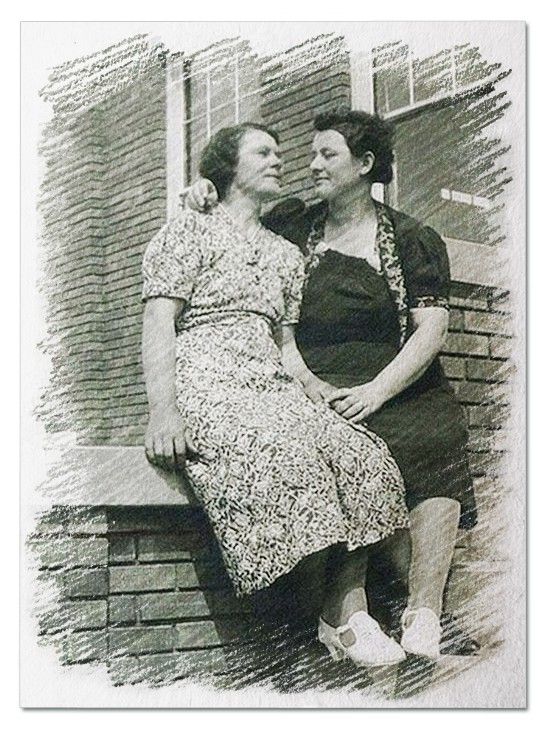
The two burly women raised their right hands and greeted my mother:
"It’s lovely to meet you! Laura had already told me about you," said Mum, breaking the ice, and I suppose it was true that the ‘midwife’ had briefed her on the burly women...
“Oh, really! And what did she tell you about us?” the two burly women asked suspiciously.
“That you work as bricklayers, which surprised me greatly, as it’s not exactly a common occupation, as you’re no doubt well aware.”
“That’s right! I reckon we’re the only ones in this country who work as stonemasons.”
"To me, all work is dignified! I earn my living giving injections and doing stitches. And my husband is always off travelling to ‘the Americas’ and has to take whatever work comes his way."
"Laura had already told us you were a very practical woman, but I think she’s underestimated you! But we know you’re tired; we just wanted to meet you and let you know that if you need anything from us, we’re here for you. It’s no great thing, but we’ve got a ‘Guzzi’ motorbike to take you wherever you need to go."
"Well, I thank you from the bottom of my heart! Though I can’t quite picture myself on a motorbike with my ‘Chato’ on the way to the doctor."
"HA, HA, HA!" they all laughed at my mother’s remark.
"Don’t worry! We’ve got a sidecar that we’ve adapted, which fits you and your son perfectly.
—Well, Eladia, thank you so much from the bottom of my heart!
The strong women continued chatting about trivialities with my mother, whilst Laura, who was there for the reason she’d come, sorted out a few things around the house and left a bag with some food she’d prepared. When she’d finished, she ‘picked up’ the two women and they left our house. They didn’t want any hot chocolate; they simply didn’t like it. As they left, already on their way down the stairs, they shared with Laura their thoughts on my mother and the way she’d treated them:
"Antoñita is a wonderful woman! She hasn’t made a single comment about our relationship. Hasn’t she realised?
"Of course she’s realised you’re lesbians!" Laura pointed out.
"Eh bien, il l’a très bien caché! (Well, she’s hidden it very well!)" exclaimed the Belgian.
“The thing is, what she values is people’s hearts and their kindness, not their sexual orientation,” Laura concluded.
“I’ve realised that!” exclaimed the Spanish stonemason.
"Well, I was on the verge of asking her our password: ‘Are you a bookseller?’, luckily I didn’t, we would have looked ridiculous," said the other.
Laura’s words about my mother’s views were very well received by the couple.
During the Franco era, being openly lesbian was forbidden, so women in that situation had to hide their sexuality.
To avoid intruders in their circles of friends, they developed various techniques to protect themselves; one of them was to ask a potential member of their group: ‘Are you a bookseller?’ If the answer was ‘Yes’, there was no problem in offering and accepting their friendship.
Sometimes the question was followed by this one: ‘Do you understand?’
…Over the course of that day, many more people came and went, neighbours, relatives and others I didn’t know. The chocolate ran out, the milk churns were emptied. I suppose the bad weather played a part, as winter arrived early this year. Mr Rosselló was spot on with his prediction!
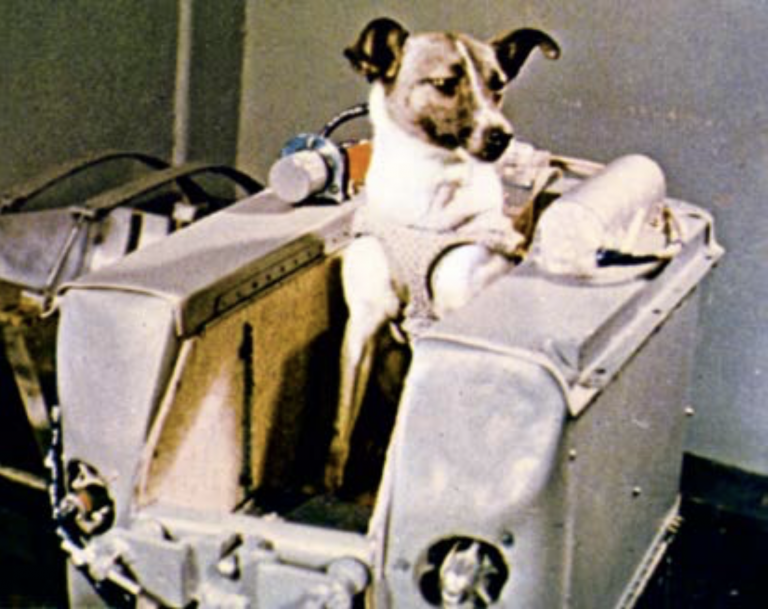
Photograph of ‘Laika’ before her flight
And that was how one of the most significant events in civilisation unfolded: my arrival into the world.
«Rejoice, chicken, for tomorrow they’ll pluck you!».
And such was the impact my birth had on humanity that the leader of the nation known as the USSR, Nikita Khrushchev.
«Go on, give me the name in Spanish!».
"All right, ‘Subconscious’! Westernised, that means: ‘Nikita Khrushchev’. He wanted to do something special and new in my honour:
A few days later, on 4 October to be precise, the USSR launched ‘Sputnik’, the first artificial Earth satellite, into space by surprise.
A few days later, on 3 November, they sought to build on this achievement by launching another new satellite. Manned by a dog, yes, a ‘four legged friend’, the dog’s name was 'Laika', thus becoming the first living creature to be sent into space aboard the spacecraft known as ‘Sputnik 2’.
'Laika' died seven hours after launch. The cause of her death was a combination of the stress she suffered during the journey, coupled with the overheating she endured due to a malfunction in the spacecraft’s thermal protection system.
However, what actually happened and the true cause and time of her death were not revealed until 2002; instead, it was widely reported that she had died on the sixth day, having run out of oxygen. Or, as the Soviet government initially claimed, she was euthanised before the oxygen ran out.
The important thing was that the experiment demonstrated that it was possible for a living creature to survive being placed in orbit and endure microgravity, paving the way for human spaceflight and providing scientists with some of the first data on how living organisms react to spaceflight environments.
After 'Laika', the USSR sent eight more dogs into space, six of which returned alive to Earth.
In any case, despite this 'little white lie' from the Soviets, I would like to express my gratitude for the detail regarding the launch, although it would have been enough simply to set off a few rockets and firecrackers, as they do during the 'Fallas' in Valencia.
END OF CHAPTER 2.
ATTENTION!
All rights to this novel are reserved.
Reproduction in any medium, whether in print, on the radio, on television or on the Internet, is prohibited without the prior written authorisation of the author of the work.
Reproduction of a small portion of the work is permitted for promotional, critical or similar purposes.
Registered in the SPANISH INTELLECTUAL PROPERTY REGISTER – EUROPEAN UNION (EU):
© 05/2023/121 No. 00765-01261862
Legal Deposit: AS 02505-2023 (Spain - EU).